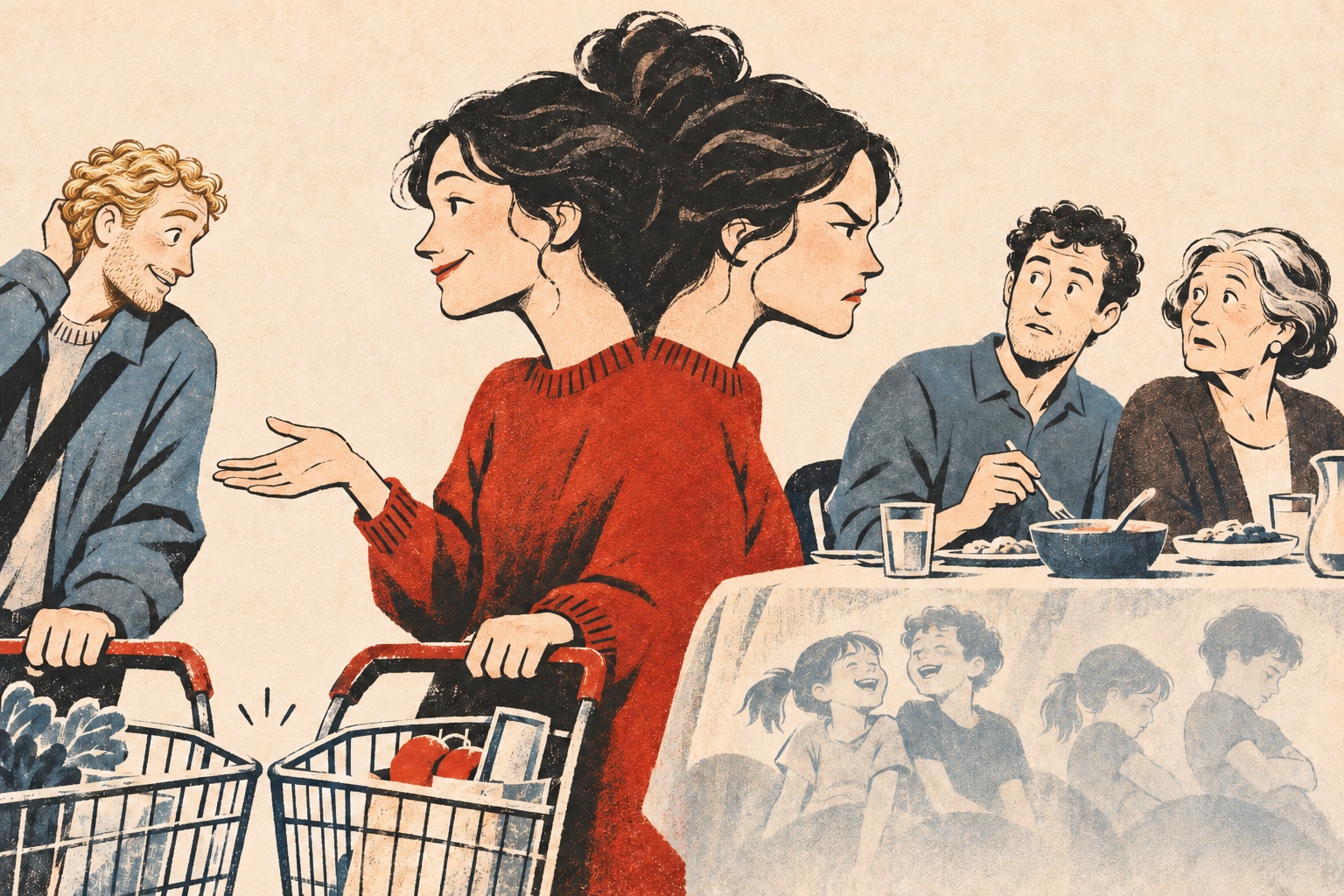
A man at the supermarket catches your trolley with his. He says sorry before you’ve even looked up. “Oh, don’t worry,” you say, and you mean it.
Later, at home, you mention that you’ve got a lot on at work and you don’t know how you’ll get through the week. Someone you love says, “I’m sure it’s not that bad.”
“Right,” you say. “I forgot you’re the only one who’s allowed to be tired.”
A friend who’s there looks up, caught off guard. Perhaps she heard an awkward attempt to reassure you. You remember the time you said you were exhausted and somehow ended up comparing who’d worked more hours that week. Another time, you were told you’d been going on about the same thing for days. You’d meant to say you were having a hard week. Once again, you felt as though you’d have to prove it.
Something similar can happen with a brother. You’re planning a family trip and mention that you’ve already booked the hotel. He says, “You’re supposed to check the flights first.” A small correction, made in passing. You’ve organised plenty of trips. You checked the flights yesterday. Yet you hear yourself say, “I do know how to book a holiday.”
For a second, you could be twelve again, halfway through explaining something while your older brother finishes the explanation for you. Or you’re twenty, trying on a dress, and your brother says, “That doesn’t suit you.” You snap at him. Your mum asks why you’re being so rude. He probably meant exactly what he said about the dress. But suddenly you remember all the times he told on you, got you into trouble, or had a laugh at your expense. He may have forgotten most of it by dinner. You carried some of it into the next day, and then the next.
With a parent, it can be as simple as the way they say, “Here, let me do it.” You’re an adult now. You may have more experience than they do with the thing they’re explaining. Still, you recognise the old feeling of having to show that you’re capable before anyone will let you get on with it.
Our minds learn what to expect from people by noticing what happens over and over. After enough conversations go the same way, a familiar phrase or tone can make us brace for what usually comes next. Sometimes we’ve already tightened our jaw or answered sharply before we realise what the remark brought back. A new friend can make the very same suggestion and we might say, “Good idea, I’ll check.” They have the advantage of a clean slate. We can take their words at face value because we have so little else to go on. We may have given our family that same benefit of the doubt many times over.
“You’re so nice to strangers. Why are you so mean to your family?” It’s an easy thing to say when you’ve just heard someone snap. But how much of a family’s history can you really know from one evening in their company?